Le Marais is one of those rare neighbourhoods that rewards you differently depending on the time of day. A morning person's paradise, yes , but also a place that opens up slowly, revealing new layers as the hours pass. Here is how I would spend a full day there, from the first coffee to the last glass of wine.
Start on Rue de Bretagne
No neighbourhood in Paris deserves to be rushed, and Le Marais least of all. Begin gently, with a coffee on or just off Rue de Bretagne : the quiet spine of the northern Marais, lined with bakeries, florists and a handful of excellent independent coffee shops that have not yet surrendered to the Instagram aesthetic.
Order whatever looks best in the window. Sit outside if the weather allows. Watch the street come to life: the baker setting out the second batch of croissants, the greengrocer arranging his crates, a dog pulling its owner towards the smell of fresh bread. This unhurried rhythm is the real Marais, before the tourists arrive.
The Marché des Enfants Rouges
A two-minute walk from Rue de Bretagne, a low doorway leads into the oldest covered market still operating in Paris. The Marché des Enfants Rouges was founded in 1615 : originally an orphanage whose children wore red, hence the name : and has been feeding the neighbourhood ever since.
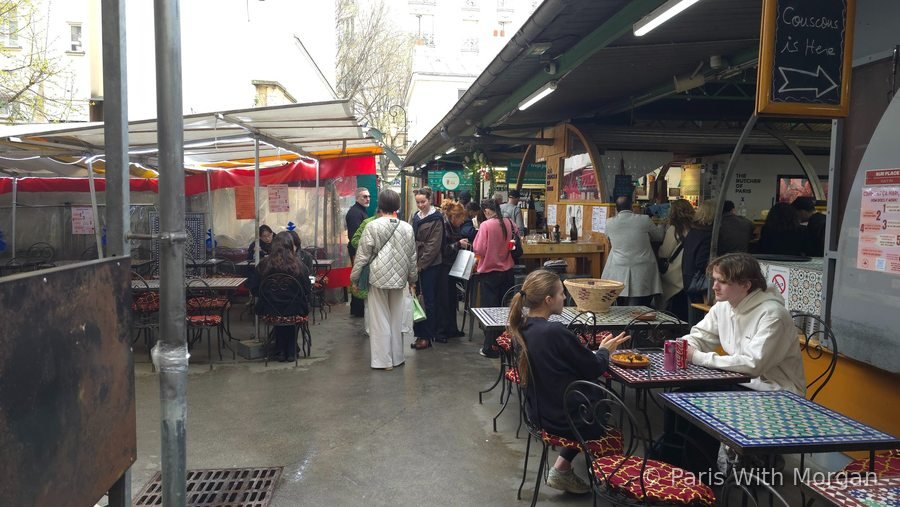
Inside, a dozen stalls sell food from around the world: Moroccan pastillas, Japanese bento boxes, Lebanese mezze, Antillean accras, freshly shucked oysters. The light filters through the old glass roof in golden beams. The smell is extraordinary: bread, spices, coffee, citrus peel all at once.
Arrive before 10am to pick up ingredients for a picnic later, or simply have a second breakfast standing at one of the counters. The Lebanese stall does the best falafel wrap in the neighbourhood. The crêpe stand has a queue for a reason.
Rue du Temple : a corridor through time
Head south along Rue du Temple, one of the great overlooked streets of the Marais. Most visitors walk it quickly on the way to somewhere else, which means they miss the extraordinary sequence of 17th-century hôtels particuliers that line its length.
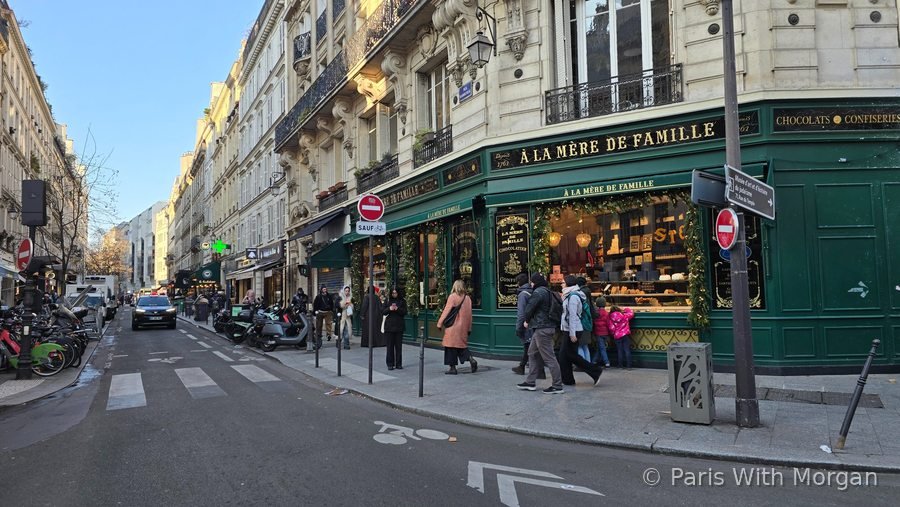
These grand private mansions were built for the aristocracy who flocked to the Marais after Henri IV created Place des Vosges in 1612. Look up at the carved stone doorways, the ornate ironwork, the glimpses of hidden courtyards through half-open gates. If a door is open, it is entirely acceptable , and very Parisian , to slip inside and look at the courtyard. The worst that can happen is that someone politely asks you to leave.
At the intersection with Rue des Archives, pause and look in both directions. You are standing at the heart of medieval Paris, in a street that has barely changed its dimensions in six centuries.
The Musée Carnavalet : Paris's memory
Tucked behind the Place des Vosges, the Musée Carnavalet is the museum of Paris's own history : and one of the city's great hidden treasures. Housed in two interconnected Renaissance mansions (one of which was home to Madame de Sévigné for twenty years), it traces the story of Paris from prehistoric times to the 20th century.
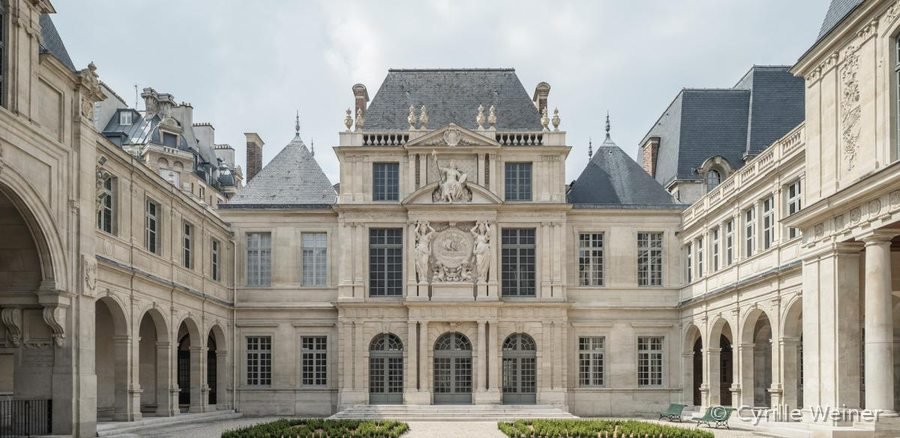
The collection is vast, over 600,000 objects spanning 2,000 years, but the building itself is half the pleasure. The courtyards are among the most beautiful in the Marais, and the sequence of period rooms reconstructed inside (including Marcel Proust's cork-lined bedroom, moved here intact) is unlike anything else in Paris.
Best of all: entry is free. Allow at least an hour, more if you have it. The rooms dedicated to the Revolution are particularly gripping , original documents, personal objects, the actual key to the Bastille. History stops being abstract very quickly.
The Carnavalet is the kind of museum that reminds you why Paris is Paris , not just a beautiful city, but one that has been consciously, obsessively in love with its own story for centuries.
Rue des Rosiers : lunch in the Jewish quarter
By now you have earned a proper lunch. Head to Rue des Rosiers, the historic heart of Paris's Jewish quarter. Despite the waves of gentrification that have transformed most of the Marais, this street has kept its identity with remarkable tenacity.
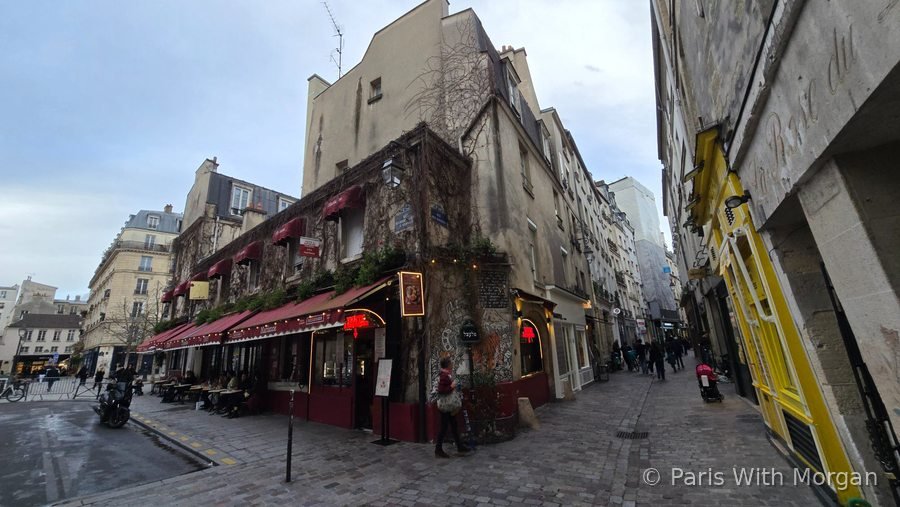
Hebrew bookshops, synagogues dating from the early 20th century, bakeries still selling challah on Friday mornings. And the falafel. L'As du Fallafel at number 34 is legendary, and the queue starts forming before noon and is entirely worth joining. If you prefer to sit down, Chez Marianne a few doors down offers a generous mezze spread in a warmer setting.
Eat slowly. This street deserves it.
An afternoon at Place des Vosges
After lunch, join the Parisians who know that the best use of a Tuesday afternoon is sitting in the garden of Place des Vosges with nothing in particular to do.
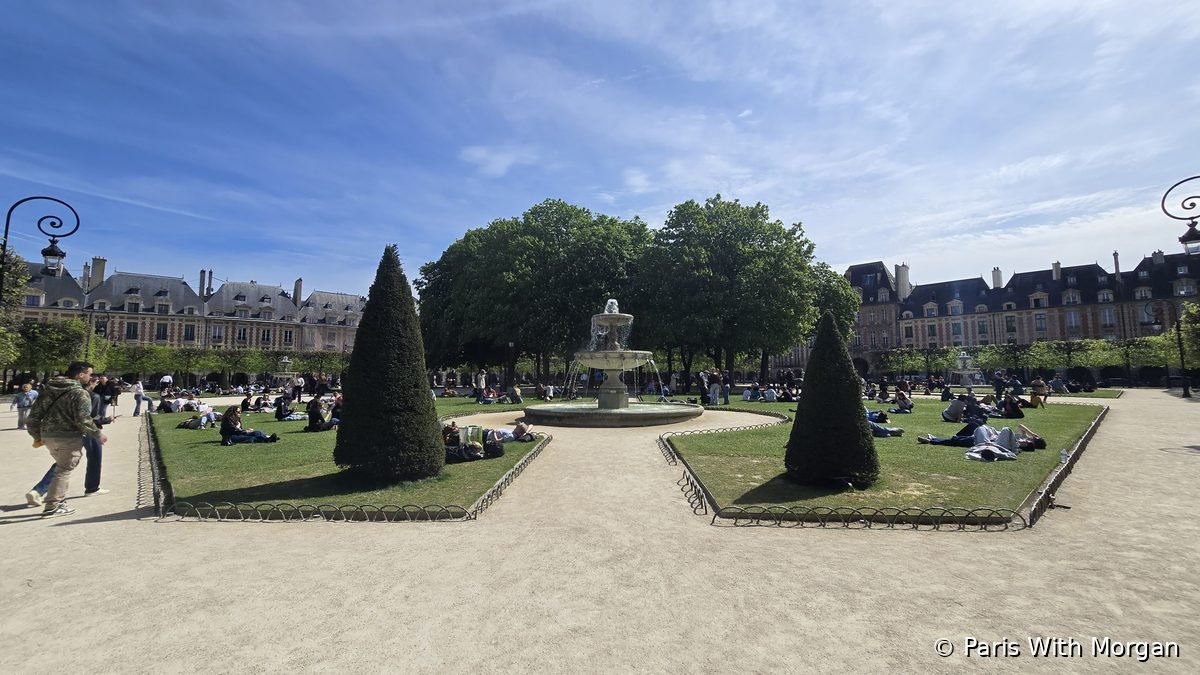
Built in 1612 by Henri IV, the square is a study in perfect proportion: 36 pavilions of warm brick and pale stone, arranged in a precise square around a garden of linden trees and fountains. Victor Hugo lived at number 6 for sixteen years. His apartment is now a free museum, well worth a visit.
Wander the arcades that run around all four sides of the square , galleries, antique dealers, a handful of restaurants. Have a coffee at Ma Bourgogne in the northwest corner, one of the last genuinely old-fashioned cafés left in the neighbourhood. Order a Monaco (beer, grenadine, lemonade) and watch the afternoon pass.
Where to end the day
As the light softens and the crowds thin, the Marais reveals its most seductive side. The golden hour here is genuinely golden : the limestone and brick catch the late afternoon sun in a way that makes everything look slightly unreal.
For an aperitif, the terraces on Rue de Bretagne come back to life around 6pm. For dinner, the streets between Rue du Temple and Rue des Archives hide some of the neighbourhood's best restaurants , seek out any place that has hand-written menus, no sign in English on the door, and a full room of locals. Those are the ones worth finding.
- The Marché des Enfants Rouges is closed on Mondays, so plan accordingly
- Musée Carnavalet is free and open Tuesday to Sunday, 10am–6pm
- Place des Vosges is at its most beautiful before 10am and after 5pm. Avoid midday
- L'As du Fallafel closes on Friday afternoon and Saturday (Shabbat)
- The Marais is very walkable , everything in this itinerary is within 15 minutes on foot
- Most courtyards on Rue du Temple are open during business hours , push the doors