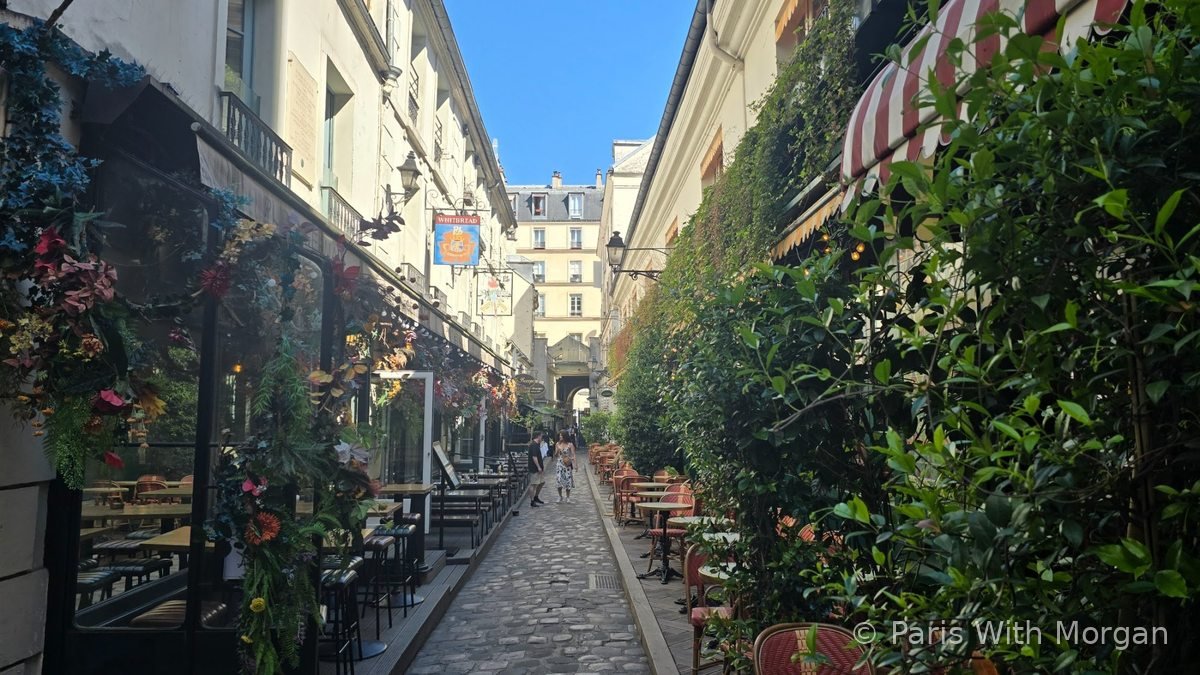
Paris has two faces. The one everyone knows, the boulevards, the monuments, the grand perspectives, and the one hiding just behind it: a labyrinth of covered passages, cobbled alleys and secret courtyards that have barely changed since the 18th century. Saint-Germain-des-Prés holds more of these hidden worlds per square kilometre than almost anywhere else in the city.
Most visitors walk straight past them. The entrances are often unmarked, a gap between two buildings, an archway half-hidden by a restaurant awning, a door that looks private but isn't. Knowing where to look is everything. Here is my list.
The best things in Paris are never signposted. They are found by slowing down, looking sideways, and being willing to push an unmarked door.
Cour du Commerce Saint-André
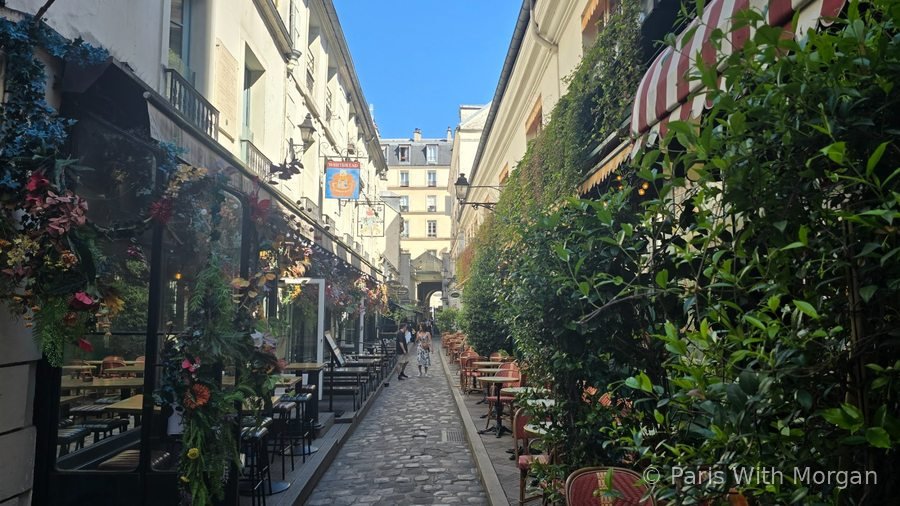
Enter from Boulevard Saint-Germain through a narrow archway between numbers 130 and 132, and you step directly into the 18th century. This cobblestone passage, lined with restaurants and ivy-covered walls, was cut through the city in 1776, and remarkably, it has kept almost exactly its original character.
The history here is extraordinary. Jean-Paul Marat printed his revolutionary newspaper L'Ami du peuple from a basement in this passage during the Revolution. Dr. Joseph-Ignace Guillotin, who lived nearby, reportedly tested an early prototype of his infamous device on sheep within these walls, a story that is probably half legend, but too good to dismiss entirely. A section of Philippe-Auguste's medieval city wall is still visible inside one of the restaurants, preserved behind glass.
Today the passage is very much alive: the tables spill onto the cobblestones on warm evenings, and the smell of wood smoke and garlic drifts from the kitchens. Come at lunch on a weekday to have it mostly to yourself.
Passage Dauphine
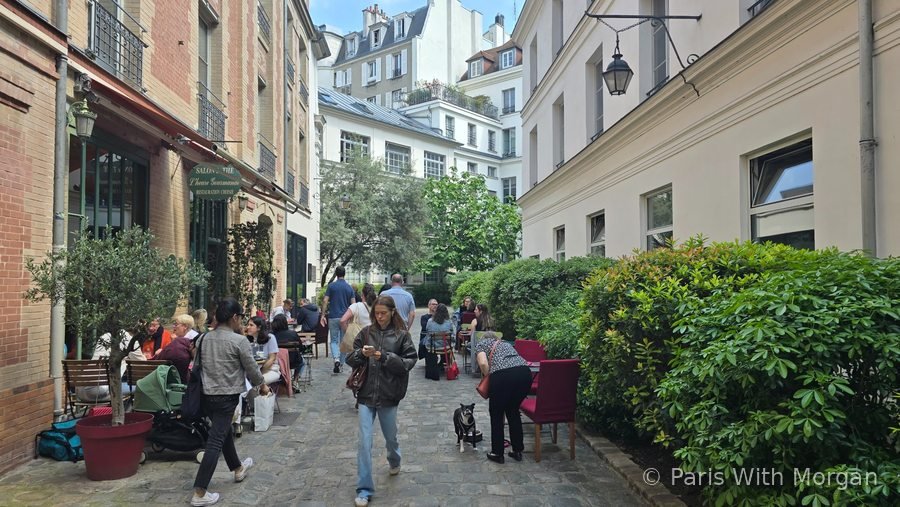
A few steps from the Cour du Commerce, Passage Dauphine runs parallel to Rue Dauphine and connects it quietly to Rue Mazarine. It is calmer, less theatrical than its neighbour, more of a neighbourhood alley than a historic monument, but that is exactly its charm.
What few visitors realise is that the passage follows the line of the enceinte Philippe Auguste, the great medieval wall built around Paris at the end of the 12th century. A section of that wall survives inside a school tucked at the end of the passage, where you can still see the original stonework preserved.
The passage is home to high-end interior design showrooms and ateliers, discreet, beautiful spaces that give it a calm, almost private atmosphere. On sunny days, you will find locals mingling with students from the nearby schools, sitting on steps and low walls as if the whole passage were their own courtyard.
Most people walking Rue Dauphine outside have no idea it exists.
Place de Furstemberg
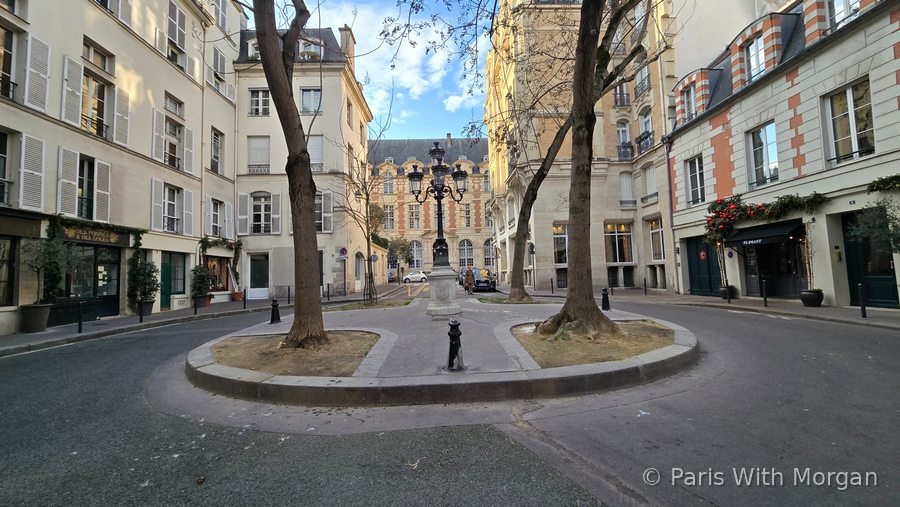
Strictly speaking, Place de Furstemberg is not a passage, but it has the same quality of hidden-ness, the same feeling that you have accidentally stepped through a fold in time. Enter from Rue de l'Abbaye through a narrow opening between two buildings, and you find yourself in one of the smallest, most perfectly proportioned squares in Paris.
At the centre stands a cast-iron lampadaire à cinq bras, a five-armed lamppost that appears in more paintings and photographs than almost any other street fixture in Paris. Around it, four paulownia trees that erupt in lavender blossom every April. The facades are cream and ochre, the scale is intimate, and the whole thing has the quality of a stage set, except that real people live here, and have done for three centuries.
The square was created in 1699 by Cardinal de Fürstenberg, abbot of Saint-Germain-des-Prés, on the grounds of the abbey. Eugène Delacroix, one of France's greatest painters, had his studio at number 6 from 1857 until his death in 1863. The apartment is now a small museum, one of the most moving spaces in Paris, exactly as he left it, with his palette still on the workbench and the light falling through the north-facing windows.
Cour de Rohan, three courtyards in one
This is the most secret of all, and the hardest to find. Accessible only through the Cour du Commerce or from Rue du Jardinet (a street so small it barely appears on maps), the Cour de Rohan is actually a sequence of three interconnected courtyards, each opening onto the next through low archways.
The name is a corruption of Rouen, this was the Paris residence of the Archbishops of Rouen in the 15th century. What you find today is a sequence of private residential courtyards, cobbled and plant-filled, with washing lines strung between windows and cats sleeping on windowsills. It feels less like a tourist attraction and more like a genuine slice of Parisian domestic life from another era.
A pas-de-mule, a medieval mounting block used to help riders onto their horses, still stands in the second courtyard, one of only a handful remaining in Paris. You could easily walk past it without noticing. Don't.
Practical note: the Cour de Rohan is technically private and is not always open. The best chance of access is through the Cour du Commerce on a weekday morning, when the connecting door is often unlocked.
Rue de Buci, not a passage, but a world of its own
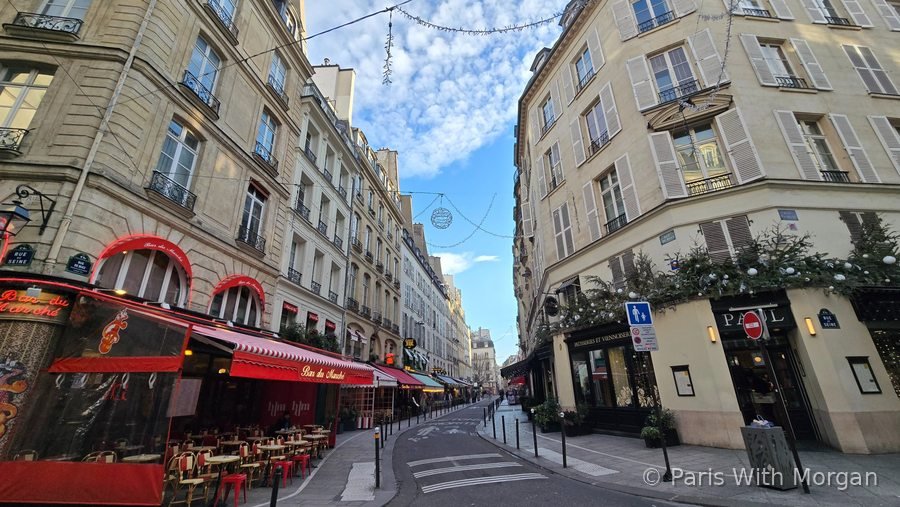
After all the hidden courtyards and unmarked alleys, Rue de Buci comes as a jolt of colour and noise. This short, lively street has functioned as an open-air market for centuries, and still does, with stalls selling oysters, charcuterie, cheese and flowers spilling onto the pavement from early morning.
It is one of those streets where standing still is an activity in itself. Watch the fishmonger arrange his catch on beds of ice. Listen to the cheese seller explain the difference between two virtually identical-looking rounds to a patient customer. Follow your nose to the boulangerie on the corner, where the queues are a reliable indicator of quality.
The street is at its best before 10am on weekdays, lively but not crowded, the produce at its freshest, the vendors in a good mood. By noon on a Saturday it becomes a gentle scrum. Both versions have their pleasures.
- The Cour du Commerce Saint-André entrance is at 130 boulevard Saint-Germain, look for the narrow archway
- Passage Dauphine: enter from Rue Dauphine, between numbers 30 and 36
- Place de Furstemberg: enter from Rue de l'Abbaye or Rue Jacob, the opening is easy to miss
- The Musée Delacroix on Place de Furstemberg is open every day except Tuesday, highly recommended, rarely crowded
- Cour de Rohan is best attempted on a weekday morning via the Cour du Commerce
- All of these spots are within 10 minutes' walk of each other, easily combined into a single morning
How to explore them yourself
The best approach is to arrive in the neighbourhood with no particular agenda and a willingness to push doors. Saint-Germain rewards slow walking and lateral curiosity far more than any fixed itinerary.
Start at the Café de Flore, not because you need to queue for an overpriced coffee, but because it is the natural gateway to the neighbourhood, and because the corner of Boulevard Saint-Germain and Rue Saint-Benoît has a particular energy that tells you immediately that you are somewhere worth exploring.
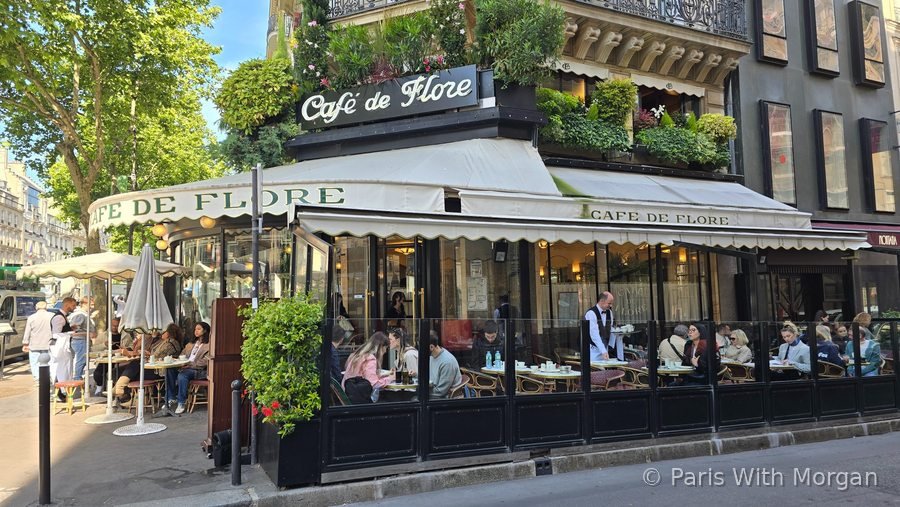
Then head east along the boulevard until you spot the archway into the Cour du Commerce. From there, let the alleys lead you where they will. The Cour de Rohan, if it's open. Place de Furstemberg for the light. Rue de Buci for an oyster and a glass of white wine, standing at the counter, the way Parisians do.
You will get slightly lost. That is the point.
In Saint-Germain, getting lost is not a problem to be solved, it is the experience itself. Every unmarked alley leads somewhere worth finding.