Saint-Germain has a reputation for being expensive and tourist-heavy, and that reputation is not entirely wrong. But the neighbourhood also has some of the best eating in Paris, at every price point, if you know where to look. Here is where I actually go.
The best meal in Saint-Germain is not always in a restaurant. Sometimes it is a sandwich on a bench by the Seine.
Brasserie des Prés €€
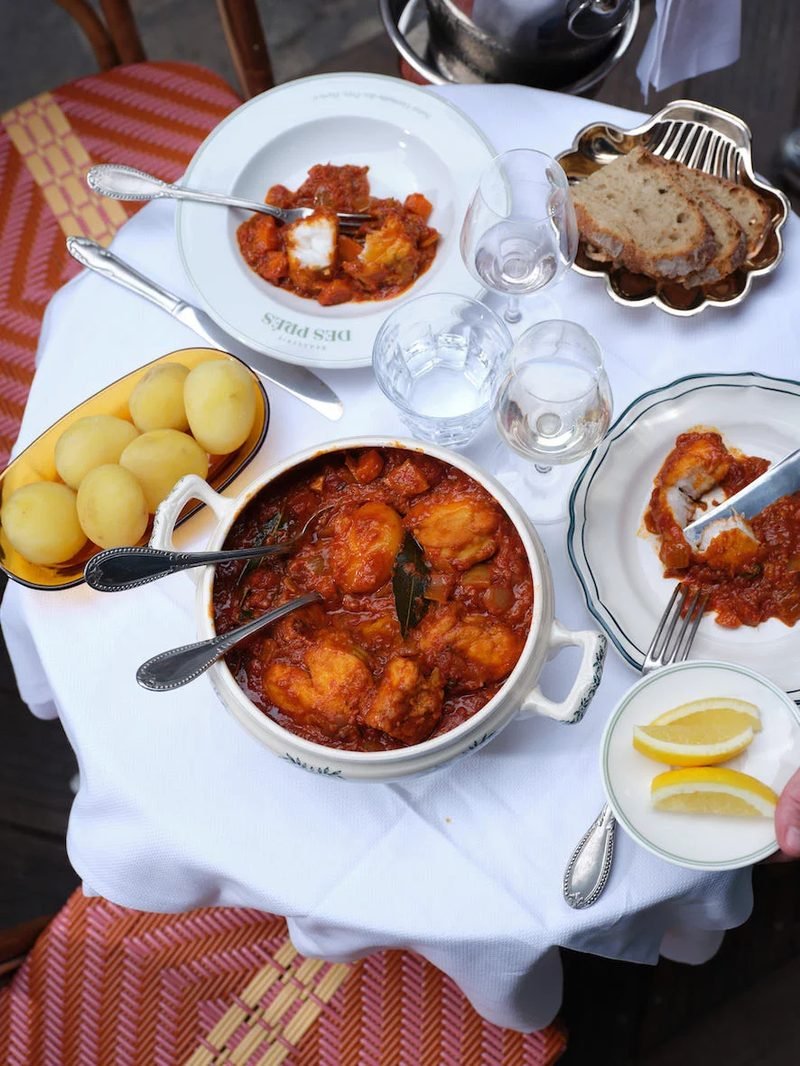
This is my neighbourhood brasserie recommendation for visitors who want to eat genuinely well without spending a fortune in one of Paris's most expensive quartiers. The Brasserie des Prés sits in the Cour du Commerce Saint-André, a cobblestoned passage that most people walk straight past. The cooking is classic French bistro done with care: oeuf mimosa, pâté en croûte, bavette-frites, and desserts that don't try to be clever.
What makes the place genuinely worth visiting, beyond the food, is the building itself. At the far end of the ground-floor dining room, embedded in the wall, you can see the remains of a medieval tower from the enceinte of Philippe Auguste, the defensive wall built around Paris in the early 13th century. The restaurant's architects worked with the Bâtiments de France to restore and expose it. It is one of those small Parisian details that stops you mid-bite.
The service is attentive, the wine list leans natural, and the prices are honest for the neighbourhood. There is also a hidden bar upstairs called Groovie, if you want to stay on after dinner.
Bouillon Racine €€
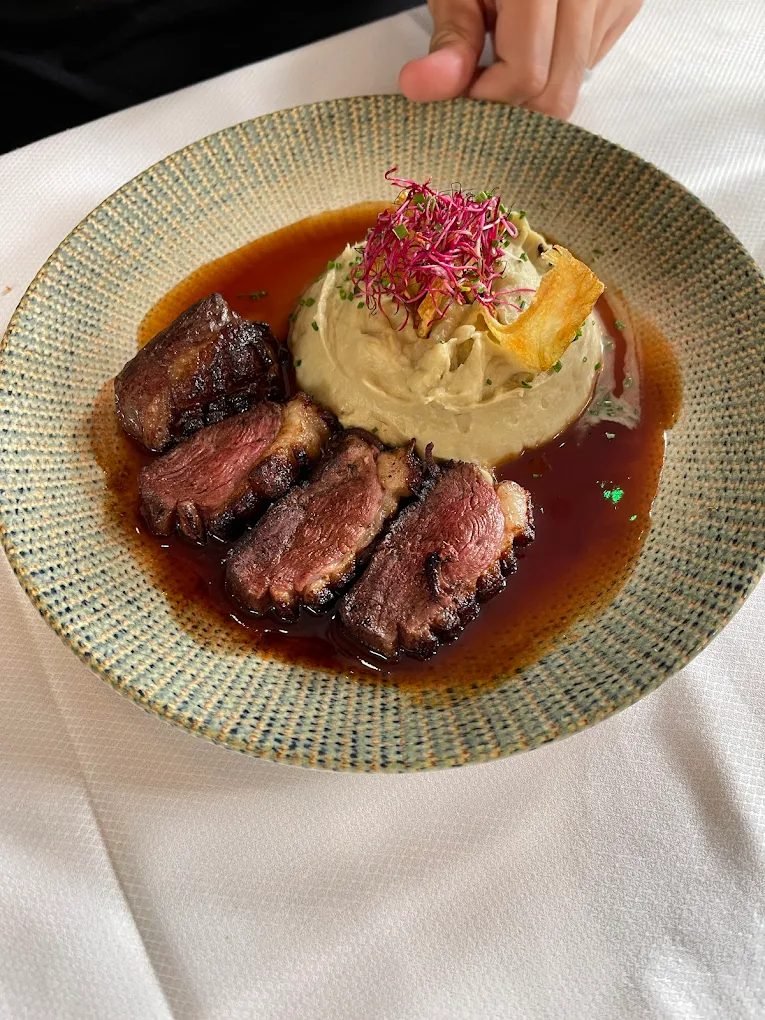
The Bouillon Racine was founded in 1906 by the Chartier family in a building that was decorated in the Art Nouveau style of the day: sculpted wood panelling, bevelled mirrors, painted opalines, marble mosaics. The whole interior was classified as a Historic Monument in 1995. It had become a canteen for Sorbonne staff in the 1960s and fell into disrepair before being completely restored in 1996 by the Compagnons du Devoir.
The food is honest traditional French cooking: pot-au-feu, joue de boeuf braisée, seasonal soups. It is not the most technically refined kitchen in Paris, but it is consistent and generous, and the setting justifies a visit on its own terms. The lunchtime formula is good value. In the evening, book a table on the ground floor to get the full effect of the room.
Brasserie Vagenende €€
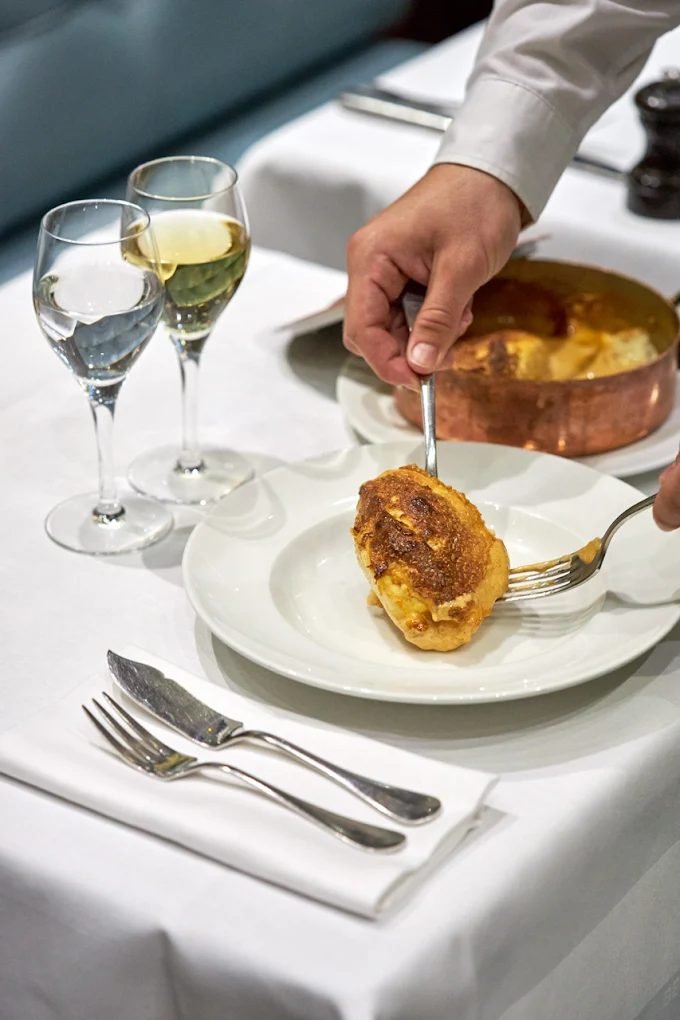
© Brasserie Vagenende, 142 boulevard Saint-Germain
The Vagenende is the third of Saint-Germain's great Art Nouveau dining rooms, and the least well known of the three. Like the Bouillon Racine, it was created by the Chartier family as one of their popular bouillons in 1904, and its interior has been classified as a Historic Monument since 1983. The room is extraordinary: bevelled mirrors multiplying the space to infinity, carved wood panelling in the pure Art Nouveau style, 36 painted glass panels by the artist Pivain depicting pastoral scenes, a glass roof covering what was once an inner courtyard. Where the Bouillon Racine is intimate and refined, the Vagenende is grand and theatrical.
Unlike the two Chartier bouillons on the Right Bank, the Vagenende is independent, still owned by a private family rather than a chain. The cooking is solid traditional brasserie, with a few cuts above the norm: Aubrac beef tartare, Bigorre black pork, aged cheeses from Marie Quatrehomme. Open every day in continuous service from noon until late, with a terrace on the boulevard for fine days.
For visitors who find the Bouillon Racine full or want something slightly less cerebral and more ebullient, the Vagenende is a very good alternative on the same boulevard, five minutes apart.
Kodawari Ramen €
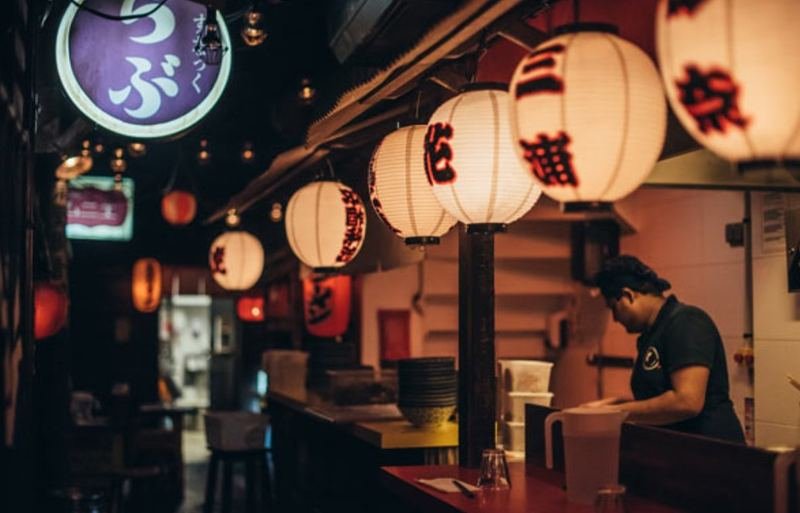
Jean-Baptiste Meusnier spent 16 years as a fighter pilot and commercial airline captain before opening a ramen restaurant in Saint-Germain in 2016. The two things are not as unrelated as they sound: Kodawari, the Japanese word for rigorous attention to detail, describes both professions accurately. The result is one of the best bowls of ramen in Paris, served in a decor that replicates a Tokyo yokochō (a narrow alley lined with small bars and restaurants) with enough accuracy to feel genuinely transportive.
Kodawari Yokochō has been in the Michelin Guide since 2017 and won the Palme d'Or of the Leaders Club France that same year. The broth is made without glutamates, using sardines from Brittany, three types of Japanese soy, and homemade noodles from wheat grown at Meusnier's own farm in the Ardennes. Kodawari Tsukiji, the second address near the Palais-Royal, is dedicated to fish-based ramen and replicates the interior of Tokyo's legendary Tsukiji fish market (closed in 2018), down to the polystyrene crates, rubber boots on the staff, and smell of damp concrete. It is one of the more impressive pieces of restaurant scenography in the city.
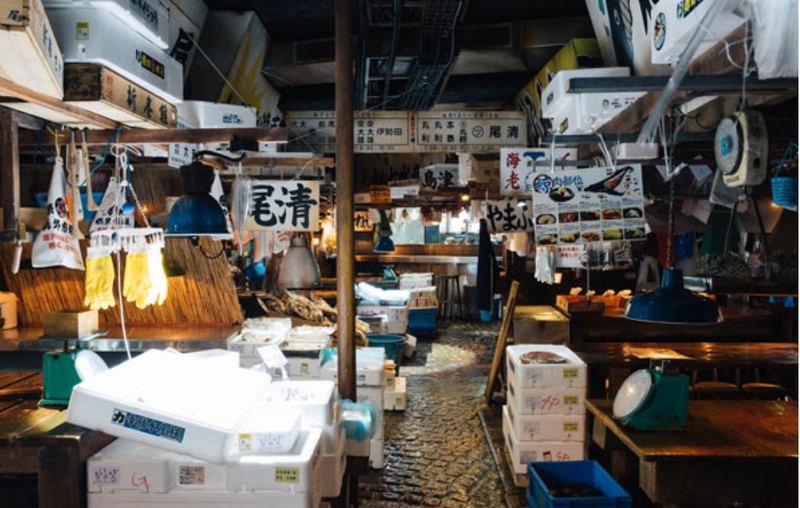
Both addresses do not take reservations, but offer a virtual queue system from 11:45am on the day. Expect to wait. It is worth it.
Le Procope €€
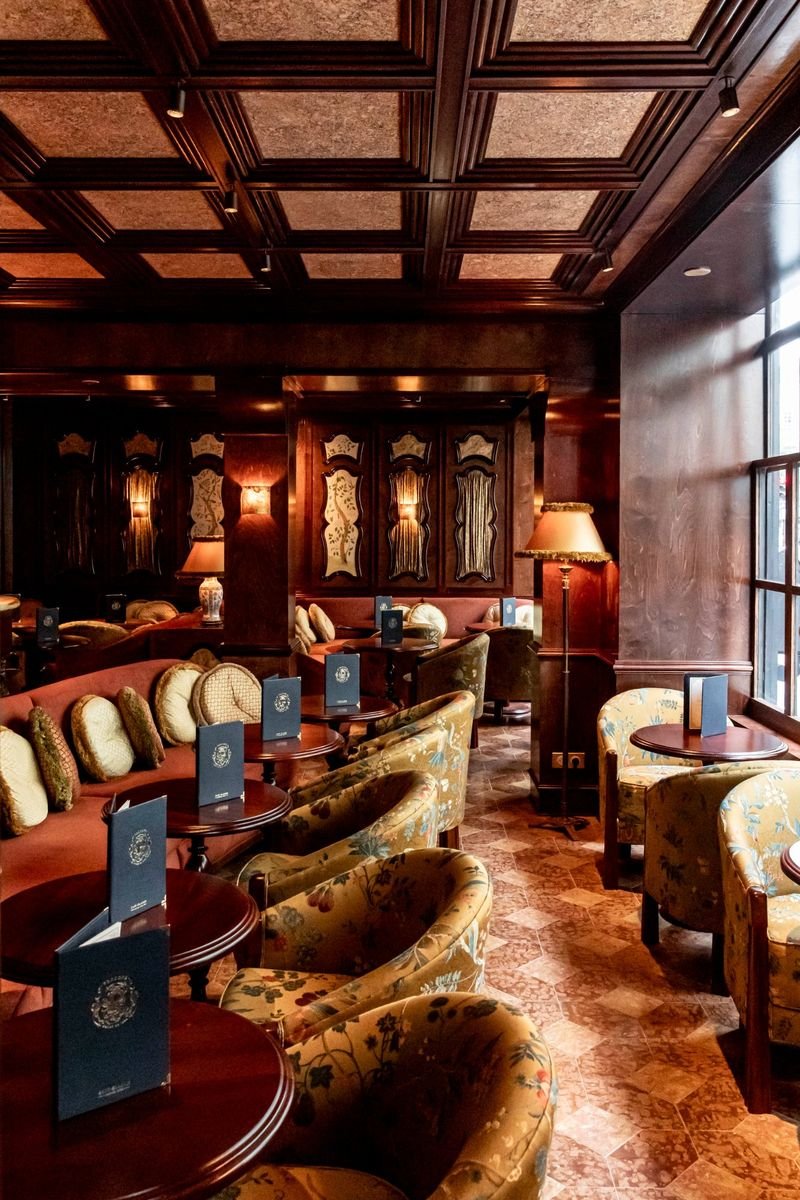
The Procope was founded in 1686 by Francesco Procopio dei Coltelli, a Sicilian who introduced the idea of serving coffee in porcelain cups at a table, as a civilised social experience rather than a rushed drink. It became the gathering place for the French Enlightenment: Voltaire, Rousseau, Diderot, and later the revolutionaries (Danton, Marat and Robespierre all drank here). Benjamin Franklin is said to have worked on the text of the American Constitution at one of its tables. The building is classified as a Historic Monument, and the walls are hung with portraits, prints and objects from its three centuries of history.
The food today is classic and unadventurous: coq au vin, tête de veau, joue de boeuf. It will not surprise anyone who eats regularly in Paris. Where the Procope genuinely delivers is the lunch formula, which offers honest traditional cooking at a price that is reasonable given the setting. In the evening it becomes more expensive and the experience is more mixed. Come for the history, eat at lunch, and lower your culinary expectations slightly.
L'Avant Comptoir du Marché €
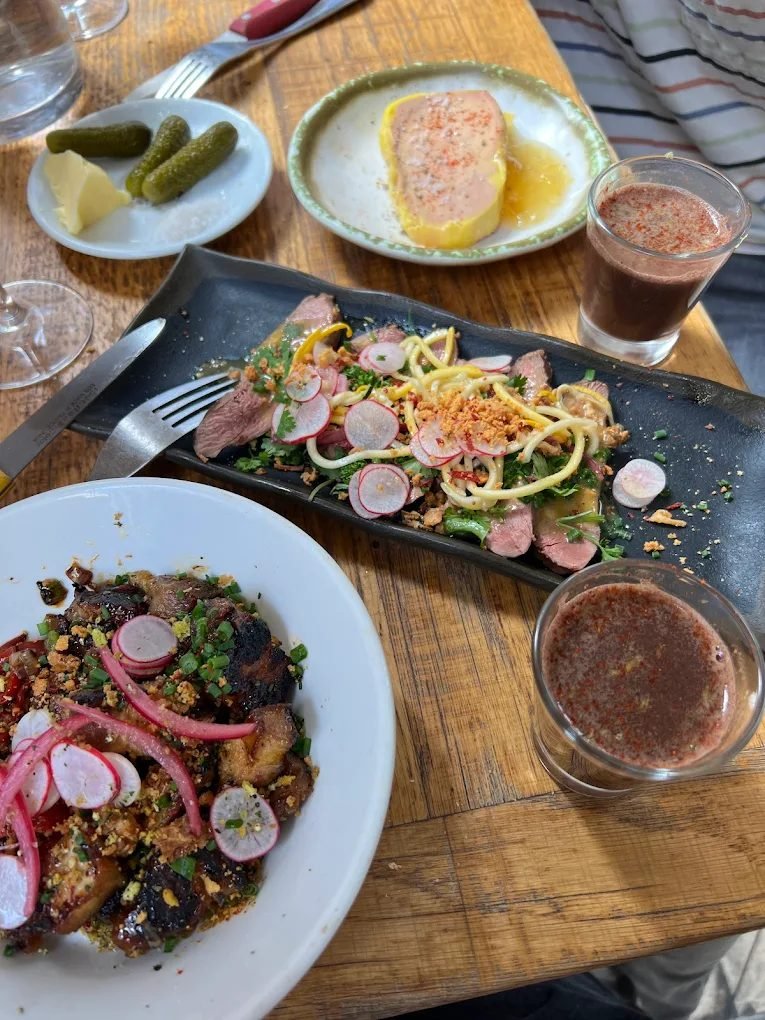
Yves Camdeborde is from Béarn, in the French Basque Country, and he has spent his career in Saint-Germain making that fact known. He is one of the original architects of the bistronomie movement in the 1990s, the idea that serious cooking did not have to happen in expensive white-tablecloth restaurants. His main address, Le Comptoir du Relais, has a six-month waiting list and remains one of the best tables in Paris. His Avant Comptoirs are the more accessible version of the same sensibility.
The Avant Comptoir du Marché sits inside the covered Marché Saint-Germain, beneath an enormous red flying pig sculpted by the artist Anouck Dupont. There are no seats at a table: you stand at the long zinc counter, order small plates from the ceiling-hung menus, and drink natural wine from the refrigerated wall cabinets. The focus is on the southwest of France: black Bigorre pork, duck, charcuterie, boudin, gésiers. It is the closest thing in Paris to a Basque txoko or pintxos bar.
Two sibling addresses sit a few steps away: L'Avant Comptoir de la Terre (3 Carrefour de l'Odéon), the original, which leans toward land produce; and L'Avant Comptoir de la Mer (same address), where 80% of the small plates are seafood. All three share the same wine list, the same standing-at-the-bar format, and the same atmosphere of slightly chaotic, completely excellent eating.
Chez Huguette, Bistro de la Mer €€
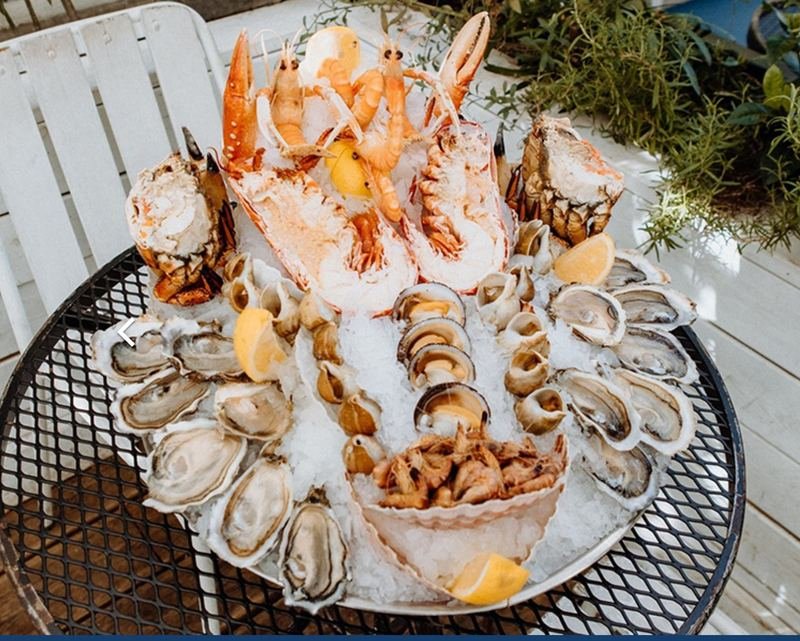
Chez Huguette is the neighbourhood's most reliable address for seafood. The formula is simple: a zinc counter, high stools, daily deliveries straight from the boat, and plateaux de fruits de mer that arrive towering over the table. Oysters, langoustines, crab, whelks, sea urchins when in season. The sort of place where you order a pichet of muscadet, take your time, and let the afternoon run away.
It is not the cheapest address on this list, but as a treat for fresh seafood in a neighbourhood that skews heavily toward meat-centric bistros, it fills a very specific gap. The terrace on rue de Seine is one of the better spots in the quartier for a long lunch on a warm day.
Shiro €€€
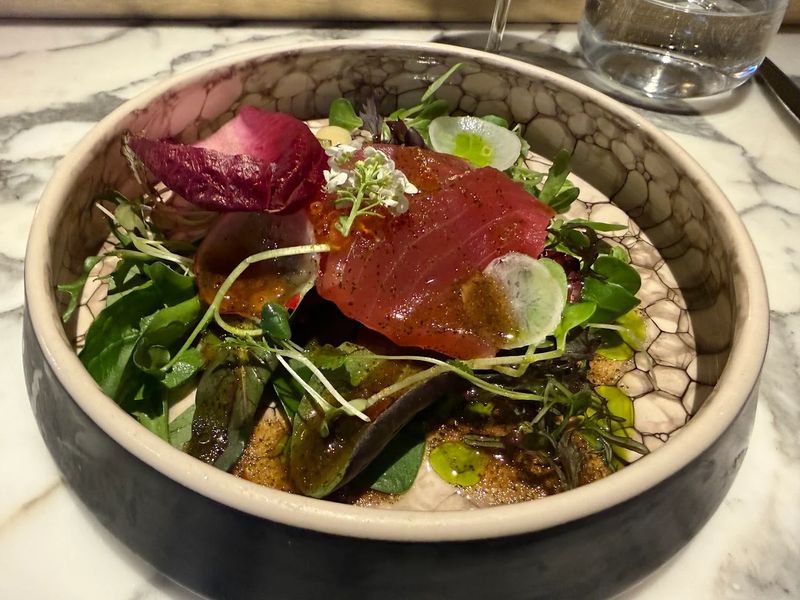
Shiro (「blanc」 in Japanese) is the kind of restaurant that divides opinion, and that is partly a sign it is doing something interesting. Chef Kazunari Hara works at the intersection of French technique and Japanese ingredients and sensibility: his bento at lunch (9 small plates, 35€) is genuinely elegant and well thought out, while the evening omakase goes further for those who want a full tasting experience.
The space itself is handsome, with a marble counter on the ground floor, comfortable seating upstairs, and a summer terrace on the boulevard. It is not the most casual address on this list, but it is one of the most original in the neighbourhood, and the lunch bento is excellent value for the quality of the cooking.
Chez Hanafousa €€€
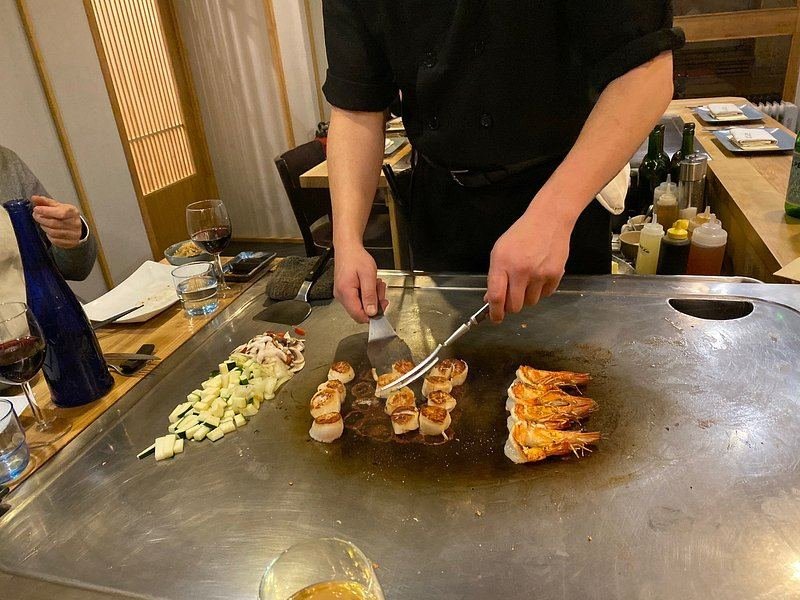
Twenty metres from the boulevard Saint-Germain, down a small silent alley that most people walk past, Hanafousa has been serving teppanyaki since 1972. It is one of the oldest Japanese restaurants in Paris, and one of the few in the city to specialise in this format: you sit around a large heated iron griddle, and the chef cooks in front of you, from lobster and Wagyu beef to foie gras and delicate fish preparations.
It is a more intimate experience than the theatrical teppanyaki shows common in larger Japanese restaurants abroad. The cooking is precise, the produce excellent, and the small alleyway setting gives the whole thing a neighbourhood feeling that is unusual for a restaurant of this quality. It is not cheap, but for a special evening it is one of the most memorable addresses in the 6th.
Le Camion qui Fume €
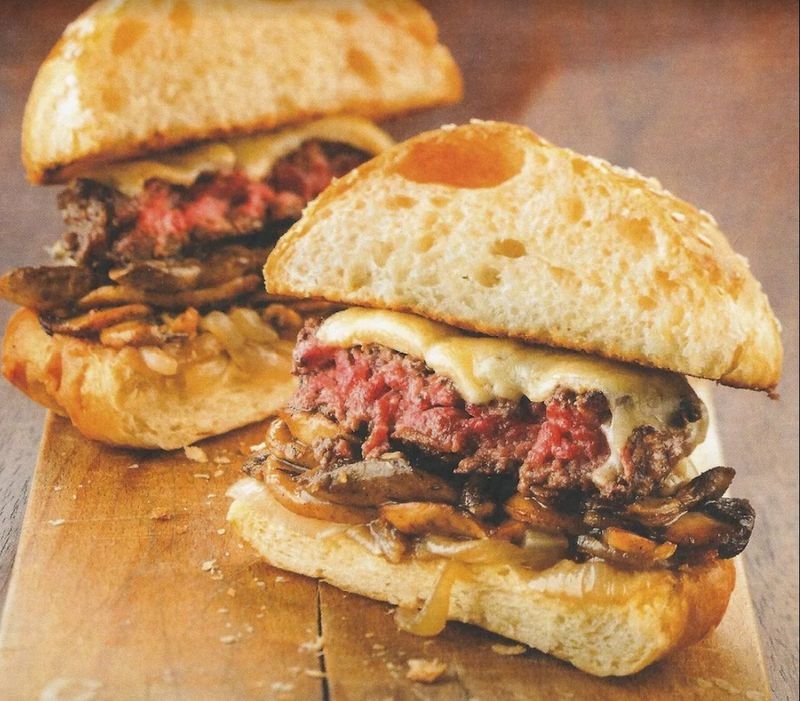
Le Camion qui Fume started in 2011 as one of Paris's first serious food trucks, founded by American chef Kristin Frederick. It pioneered the quality burger in Paris before the format became ubiquitous, and the Odéon address remains solid. The burgers are good and the product quality is there. That said, in a neighbourhood that now has Junk a few streets away, it faces real competition, and the general level has dropped slightly from the heights of its early years. Still a good option, but no longer the default choice it once was.
Junk €
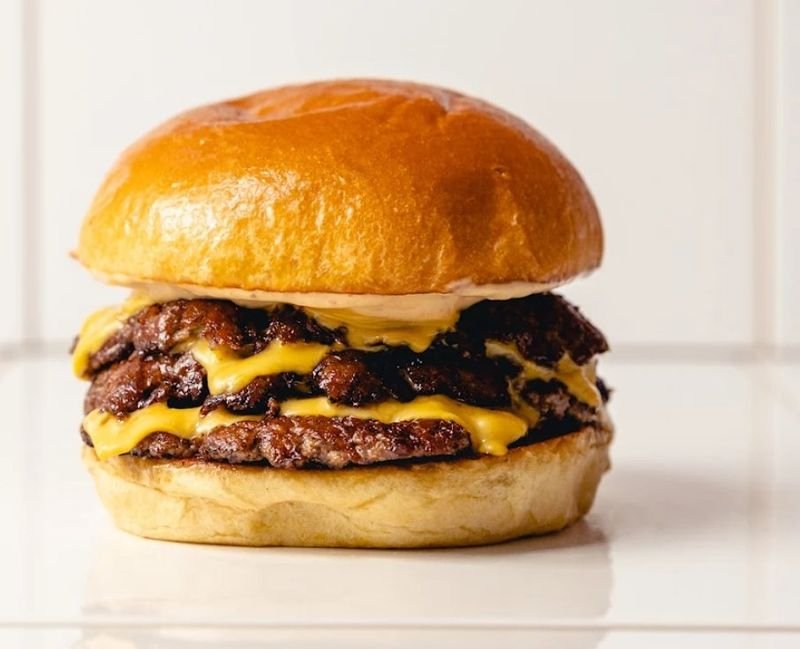
Junk does one thing: the smash burger. A cold ball of French beef (Charolaise or Limousine) pressed hard onto a very hot griddle, creating a thin, deeply caramelised crust on the outside while staying juicy within. Brioche bun, American cheese, house sauce. That is it. No salad, no tomato, no unnecessary additions. The philosophy is less-is-more executed with genuine conviction.
The Saint-Germain address is one of several Junk has opened across Paris since 2021, and the consistency across locations is impressive. It is cheap, fast, and one of the best burgers in the city. If you are in the neighbourhood and hungry, it is the right call.
Cosi €
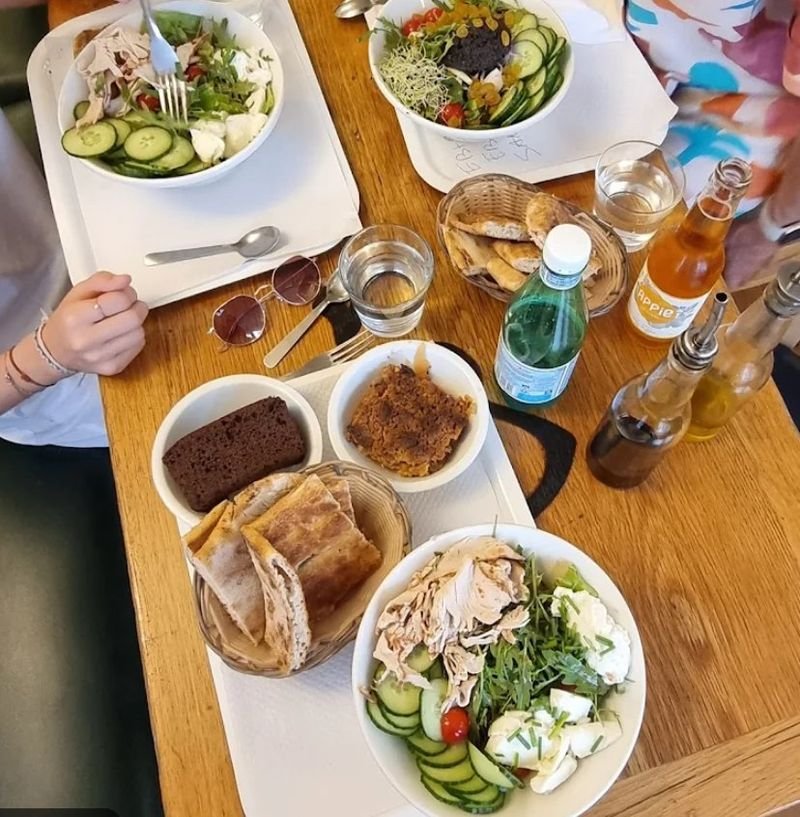
Cosi has been at 54 rue de Seine since 1989 and has built a loyal following that spans students from the nearby Beaux-Arts, neighbourhood regulars, and a steady stream of visitors who discovered it in a guidebook. The bread is the point: a thin, crispy focaccia baked in a wood-burning oven on the premises, still warm when it arrives at your table or in your hand. The sandwiches have names (the Perfide Albion, the Stonker, the Salmo) and are filled with straightforward, fresh ingredients: smoked salmon and ricotta, rosbif and confit tomatoes, mozzarella and rocket.
It is not fine dining. It is a very good sandwich, in a convivial room, at a reasonable price. The queue at lunchtime on a weekday can be long, but it moves quickly. Open every day.
Pastavino €
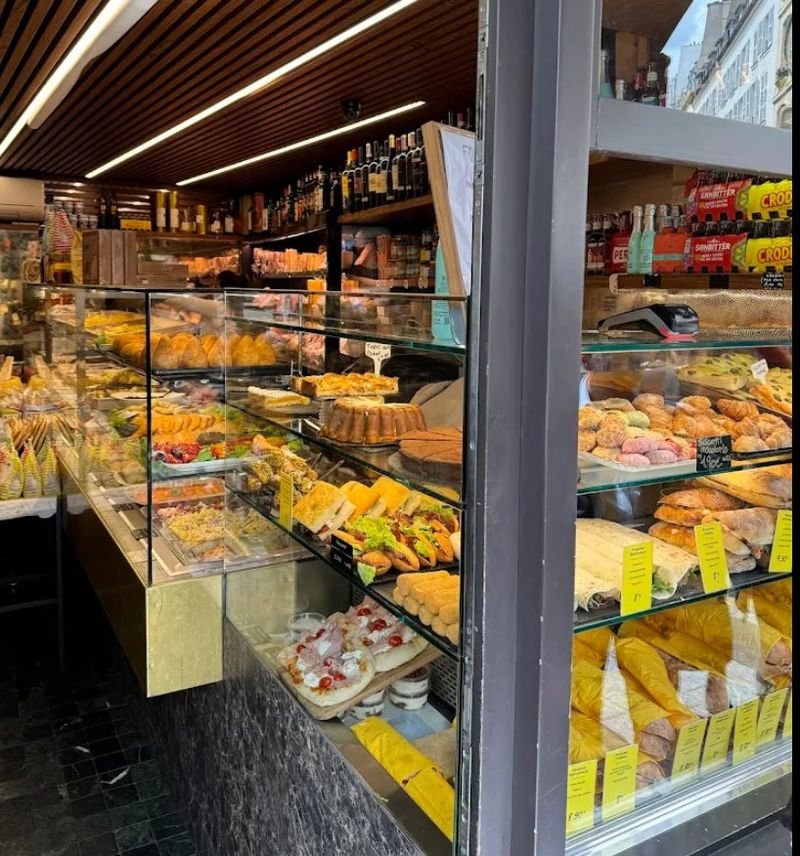
Pastavino sits a few doors from Cosi on the same street, and the two are natural rivals for the same lunchtime crowd. The focus here is Italian: fresh pasta, good charcuterie, carefully sourced cheeses. The sandwiches are made with the same attention to ingredient quality as the pasta dishes. It is slightly calmer than Cosi at peak hours and equally worth knowing about.
Schwartz's Hot Dog €
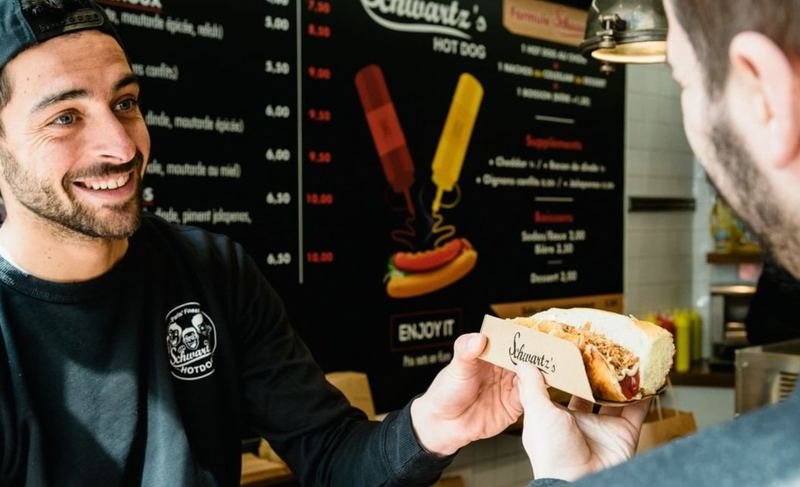
Schwartz's Hot Dog on rue de Seine is the neighbourhood's go-to for New York-style street food: proper hot dogs in soft buns, and deli-style sandwiches: hot pastrami with melted cheese and condiments made in-house. The recipes draw on 60 years of family tradition, and the result is honest, generous, and a good deal cheaper than most things in the area.
A different register from the other sandwich spots on this list, and the right choice when you want something closer to a New York deli than a focacceria.
Le Cul de Cochon €
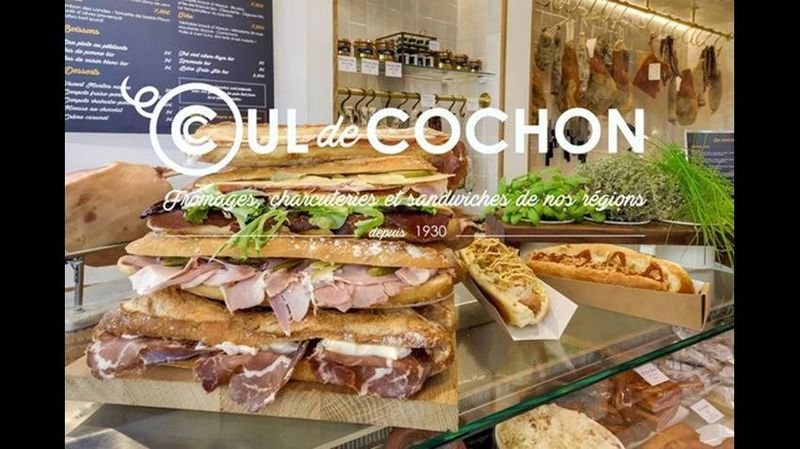
For a different angle on the neighbourhood sandwich, Le Cul de Cochon takes its cue from the charcuterie tradition: proper pork products, serious bread, and combinations that feel more like something you would eat at a good marché than at a café counter. It is the kind of address that makes locals happy and that tourists rarely find. Worth knowing about if you want something more rooted in French terroir than the international-leaning options on this list.
Damascene €€
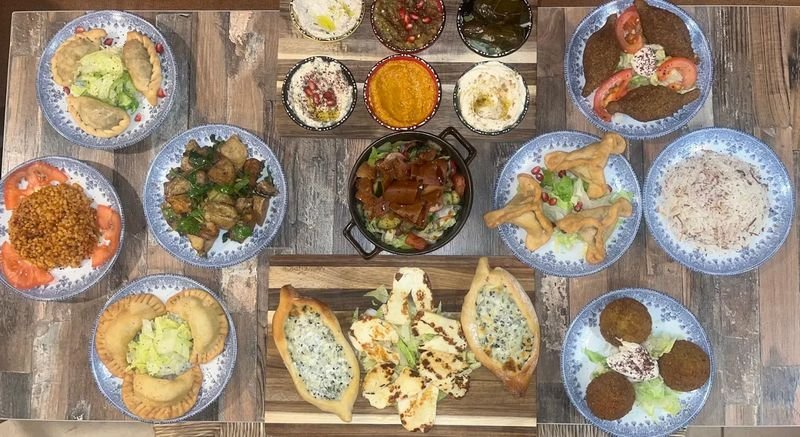
Damascene is one of the best Levantine tables in the neighbourhood, and one of the most underrated in the 6th arrondissement. The menu is built around a generous spread of mezzes: hummus, tabbouleh, falafel, kibbeh, stuffed vine leaves, spinach and cheese pastries, as well as vegetarian assortments that work beautifully as a full meal. The portions are generous, the ingredients are fresh, and the cooking is confident and precise.
The chef is genuinely welcoming and makes you feel like a regular on your first visit. The grills in particular are excellent: lamb, chicken and mixed platters with the right amount of spice and smoke. Remarkable value for this part of Paris, and an excellent addition to Saint-Germain's already very international restaurant scene.
This list reflects my personal choices as of spring 2026. Restaurants change. If an address has moved or closed since I wrote this, I would rather you tell me than find an empty shopfront.