Paris has more pâtisseries than any city has a right to. But not all of them are worth the queue, or the price. Here is an honest guide: the genuine institutions that have earned their reputation over decades, the newer names doing the most interesting work right now, and the famous faces whose hype has quietly overtaken their product.
Paris has been doing this for three hundred years. The macarons, the babas, the mille-feuilles. The question is no longer whether you will find something good. It is knowing where to look.
Pierre Hermé
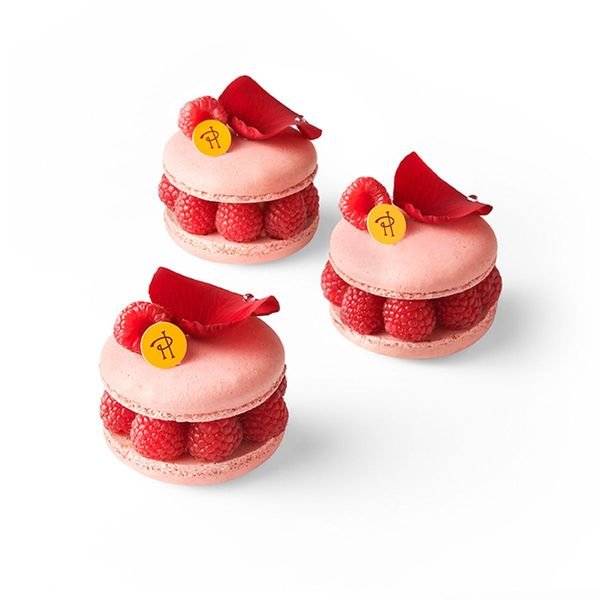
Pierre Hermé trained under Lenôtre, then worked alongside Ladurée before opening his own house in Saint-Germain in 2001. He is often compared to a couturier: he works in seasonal collections, brings unexpected flavour combinations to life with technical precision, and has created a vocabulary of pastry that is entirely his own.
His Ispahan, a macaron filled with rose cream, lychee and raspberry, is the most elegant combination of flavours I can think of in a single bite. The Infiniment Vanille is a masterclass in restraint. His tarte au citron has a perfectly calibrated acidity that most pâtisseries never achieve. No one else in Paris does quite what he does.
Christophe Michalak
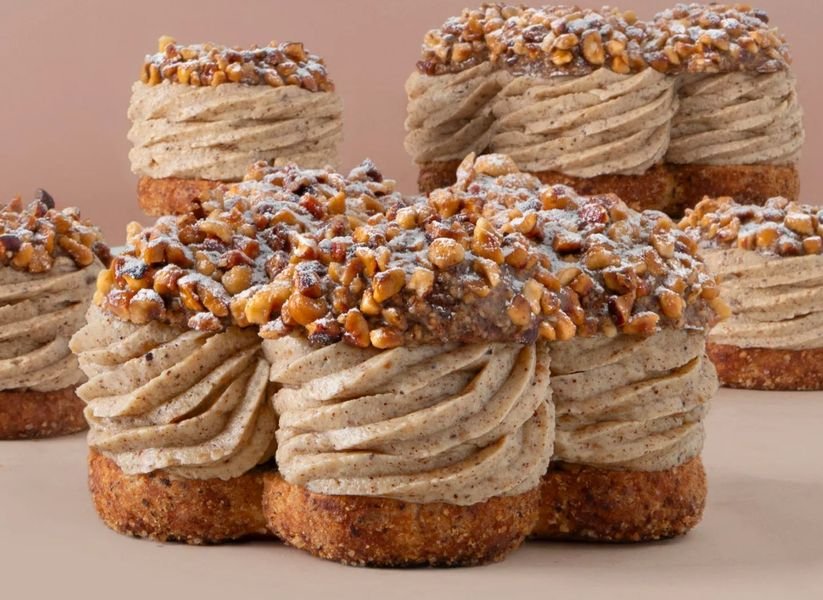
Michalak built his name as head pastry chef at the Plaza Athénée before going independent in 2013. His approach is to take the architecture of classic French pastry (the Paris-Brest, the baba, the saint-honoré) and strip it down to pure flavour and texture, removing anything gratuitous. The results are lighter and more direct than traditional versions.
His boutique on rue Étienne Marcel, opened in 2024, is his most complete address yet: viennoiserie, pastry, chocolate and bread under one roof, with a warmer, more classical feel than his earlier shops.
Yann Couvreur
Yann Couvreur opened his first boutique in the 10th arrondissement in 2016, in the neighbourhood where he began his career. He came from palace kitchens, the Prince de Galles and the Burgundy, but what he wanted to make was neighbourhood pastry at its finest: seasonal, honest, technically impeccable.
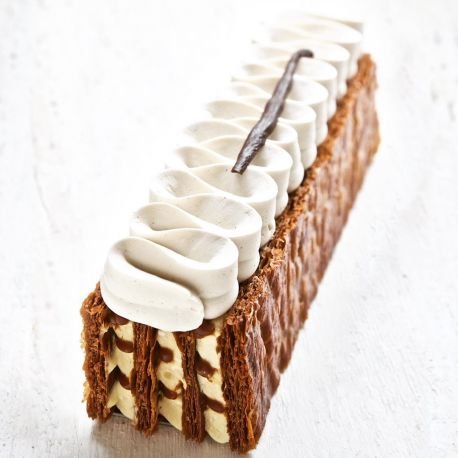
His mille-feuille with Madagascar vanilla is assembled to order and served in limited quantities. The fruit tarts show real intelligence with sugar: never too much, always exactly right. Everything is made without artificial colours or preservatives. Of all the names in this guide, Couvreur is perhaps the one most worth making a detour for.
Pâtisserie de la Grande Épicerie
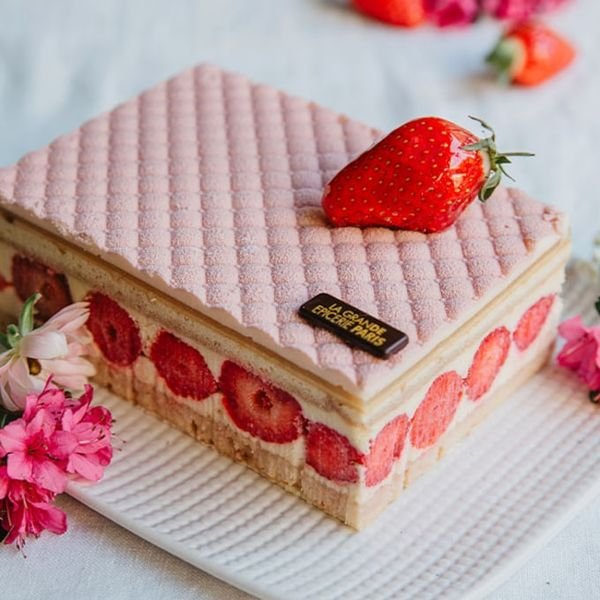
The Grande Épicerie is the food hall of Le Bon Marché, and its pastry counter deserves a separate mention. It brings together work from some of the finest pastry chefs in the city under one roof, changes seasonally, and regularly features collaborations and guest chefs. It is one of the few places where you can assess the current state of Parisian pastry in a single visit.
Beyond the pâtisserie counter, the bread, cheese, wine and chocolate sections are equally exceptional. Think of it as an overview of the current Paris pastry scene in a single afternoon. For the curious visitor with a single afternoon, this is arguably the most efficient use of time in the city.
Stohrer
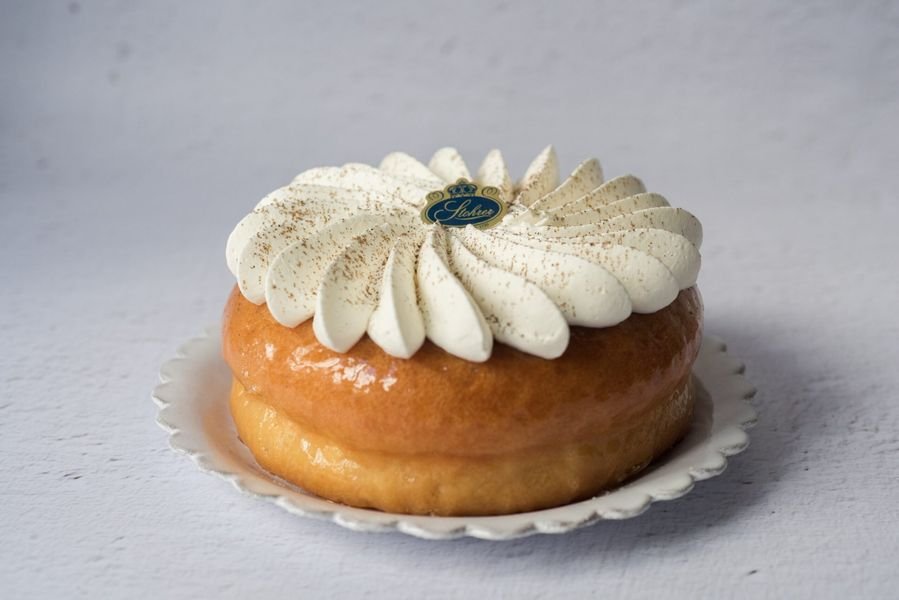
Founded in 1730 by Nicolas Stohrer, pastry chef to King Louis XV, this is the oldest pâtisserie in Paris still operating at its original address. The interior decor, designed in 1864 by a student of Paul Baudry (who decorated the Opéra Garnier), is classified as a Historic Monument. Walking through the door is one of the more transporting experiences in the city.
Stohrer invented the baba au rhum, the puits d'amour and the tarte Chiboust. These are not museum pieces. They are made fresh every day on the premises, and they remain extraordinary. The baba is imbued tableside with rum. The puits d'amour is caramelised to order with a traditional hot iron. There is nothing else quite like this in Paris.
Vincent Salur
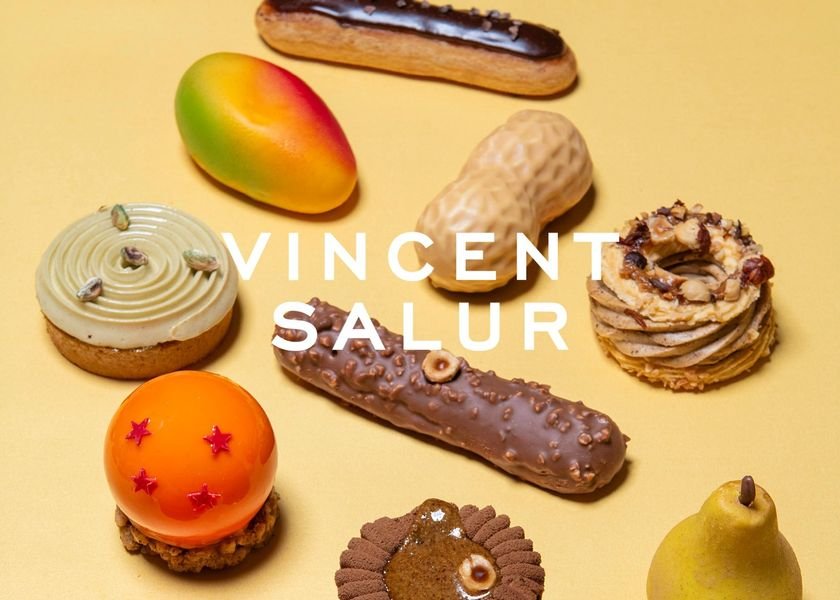
Vincent Salur is one of the most exciting names to emerge on the Paris pastry scene in recent years, building a loyal following in the 15th arrondissement before expanding to a second address at the Printemps Haussmann. His signature is trompe-l’oeil pastry — desserts that are not what they appear to be — executed with genuine technical ability rather than mere theatrics.
His pistache trompe-l’oeil, his flans, and his rose creations are standouts. The prices are notably more accessible than the big names: viennoiseries from around 1.50€ and pastries from 3.80€. This is a neighbourhood pâtisserie of real ambition, and worth visiting before the name becomes much bigger.
Brigat’
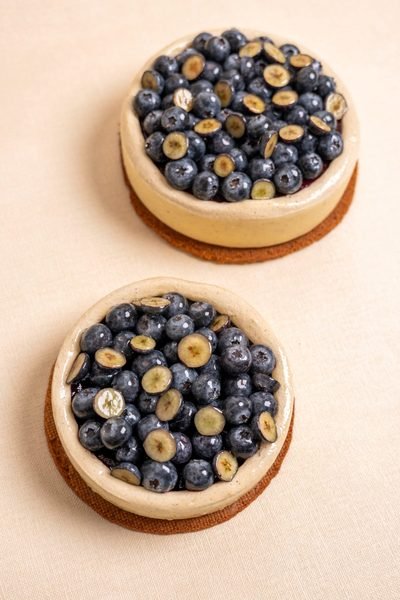
Lucio and Thomas Colombo are Italian brothers who had the confidence to open a pâtisserie in Paris and immediately put the locals on notice. The name comes from their grandfather, nicknamed after Brigata, the small Italian village where their family lived. They named the shop after him, and that heritage runs through everything they make.
The interesting thing about Brigat’ is that they work squarely within the French pastry tradition: tarts, brioches, viennoiseries, babas, but with an Italian sensibility in the sourcing: lemons from Sorrento, Iranian pistachios, the panettone that sits in the window all year round, not just at Christmas. The tarts look classical from the outside. Cut into one and the construction is more layered than you expected.
The shop is a narrow, light-filled room a minute’s walk from the Place des Vosges. The obvious move, especially in the warmer months, is to buy a tart or a brioche and take it to one of the benches under the arcades. Few addresses in this guide have a better setting in which to eat what they sell.
Le Jardin Sucré
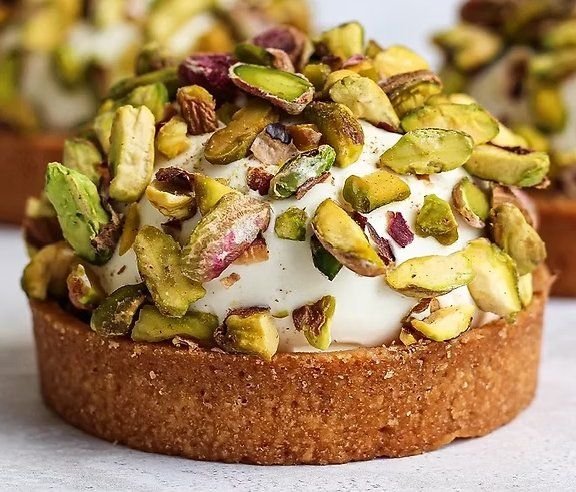
Mélanie and Arnaud Mathez opened Le Jardin Sucré in the 17th arrondissement and were quickly recognised as champions of France for macarons in 2014. Their approach is resolutely classical — seasonal ingredients, excellent sourcing, no unnecessary complexity — and their execution is consistently reliable in a way that is rarer than it should be.
The tarte pistache et fleur d’oranger has become so loved they cannot remove it from the vitrine. Their tarte noisette and tarte vanille are equally considered. The flan on weekends, made with black sugar, is one of the best in Paris. It is the kind of pâtisserie where every regular has their own unwavering favourite.
Pleincœur — Maxime Frédéric
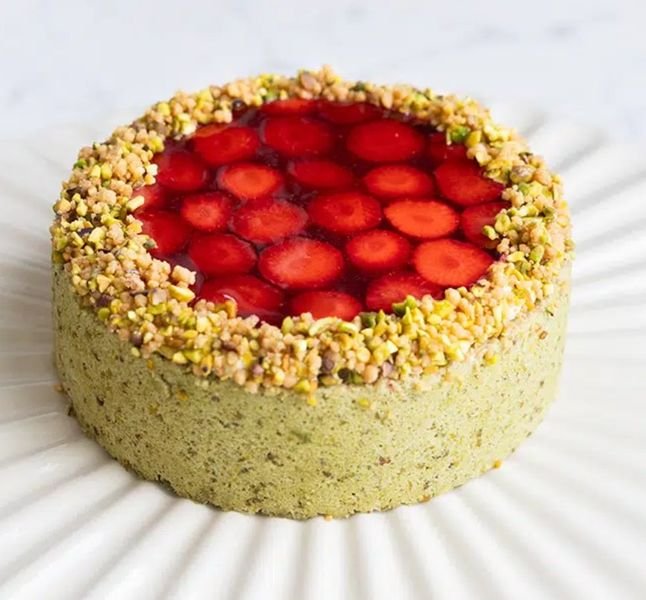
Maxime Frédéric built his reputation as head pastry chef at the Cheval Blanc, a palace hotel that takes its pastry as seriously as its cooking. Pleincœur, which he opened with his wife and chef Gætan Lucas in 2024, is his answer to the question of what happens when a palace chef decides to cook for a neighbourhood.
The result is something quietly extraordinary. The viennoiseries are made with eggs from the family farm in Normandy, noisettes from the Lot-et-Garonne, and milk from a named dairy farm. The croissant is one of the best in Paris. The pastry counter draws on the same sourcing rigour. You taste that care in everything.
La Matière — Quelque Part
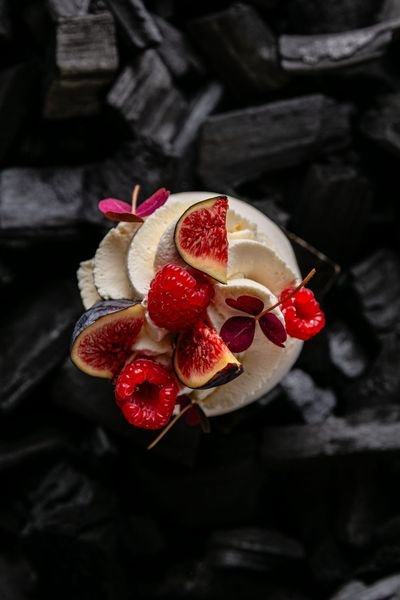
La Matière is the pâtisserie of the Quelque Part group, imagined by chefs Florian Barbarot and Pierre-Henry Lecompte. It was named the Best New Opening in the World for 2025 by La Liste, the international gastronomic reference. The space itself is unlike anything else in Paris — raw, spatial, with coloured comets suspended from the ceiling and a wall of pastries visible from the street.
The space is striking but the pastry justifies the presentation. It is excellent work built around carefully sourced chocolate and seasonal ingredients. It sits in the 9th arrondissement, in a neighbourhood that is currently one of the most interesting in Paris for independent food addresses. Parisians who know their way around a pastry case have been making a point of going.
Arnaud Larher
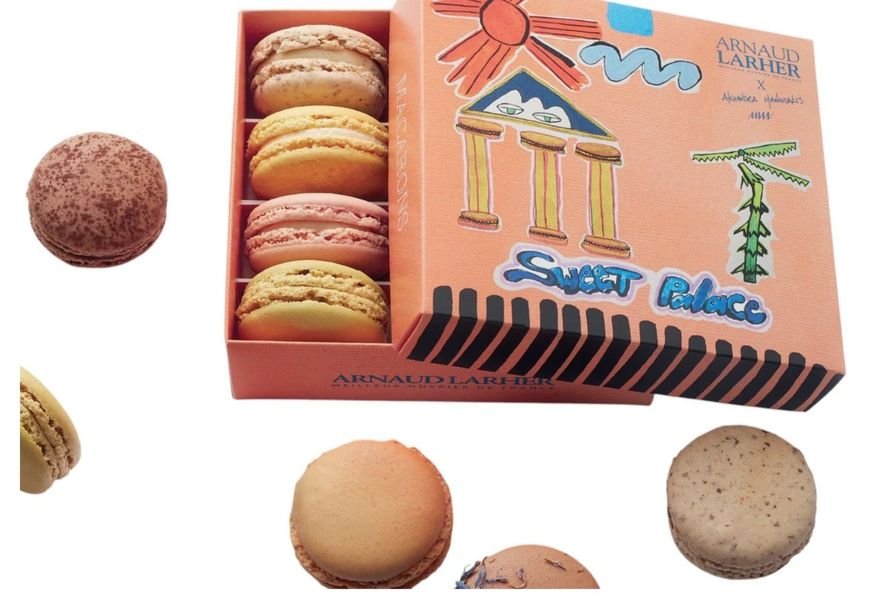
Arnaud Larher has been in Montmartre for nearly thirty years, and that kind of loyalty to a neighbourhood means something. He is a Meilleur Ouvrier de France, trained at Dalloyau and Fauchon alongside Pierre Hermé, and his work reflects that rigorous formation: technically precise and never showy, with an exceptional chocolate counter alongside the pastry.
His tarte Chloé (almond and cherry), the Toulouse-Lautrec (chocolate and pecan), and the tarte Marrakech (pistachio and orange blossom) are signatures worth seeking out. His macarons are among the finest in Paris. The Montmartre boutique has a neighbourhood intimacy that the bigger names have long since lost.
Laurent Duchêne
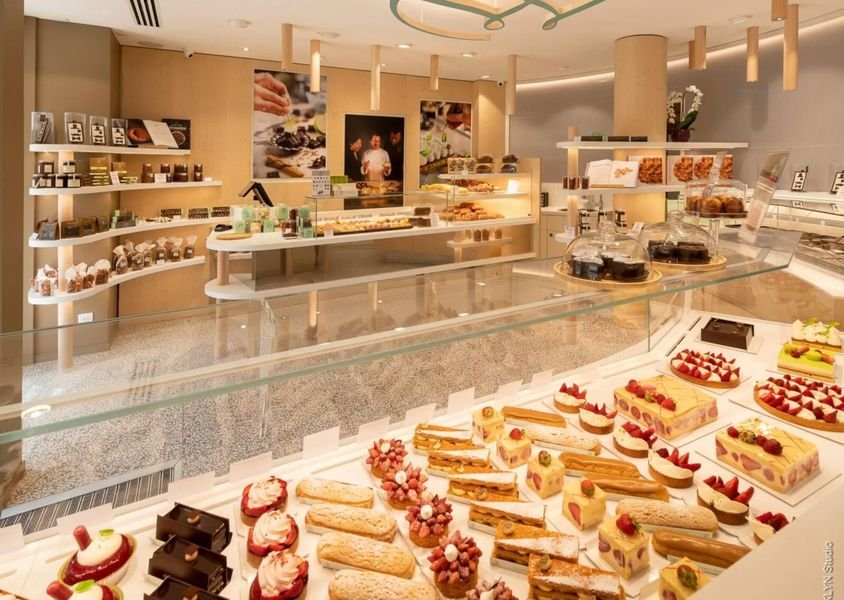
Laurent Duchêne is a Meilleur Ouvrier de France (1993) who operates three boutiques in the quieter southern arrondissements of Paris: the 13th, the 15th, and Vincennes. His work is not fashionable in the Instagram sense, but among professionals it is consistently respected: technically precise, generous in flavour, never gratuitous.
His wife Kyoko is a chocolatier of rare quality, and the two complement each other perfectly. The rue de la Convention boutique, named La Pâtisserie de Kyoko in her honour, is one of the most quietly beautiful pastry shops in Paris. The éclairs, the mille-feuille, the Paris-Brest and the Saint-Honoré are all made with the steadiness of someone who has been doing this for thirty years and knows it.
Ladurée
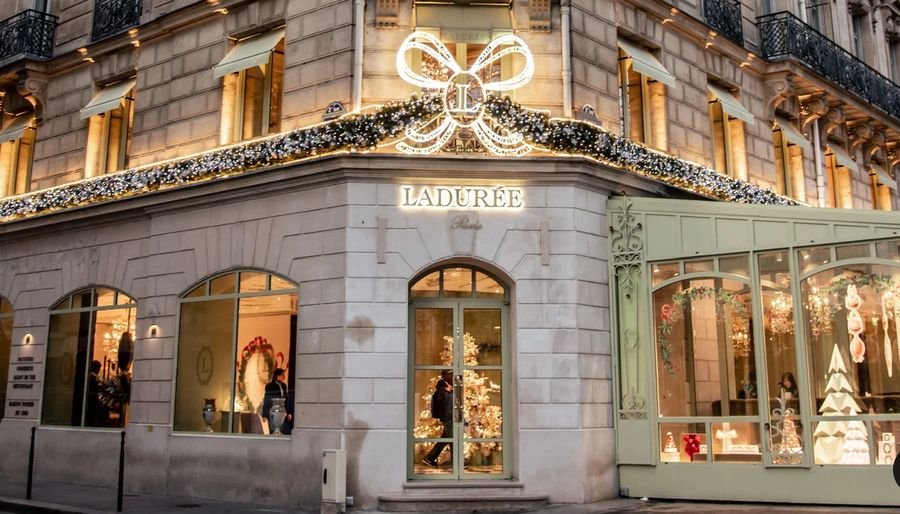
Ladurée is one of the great Parisian institutions, and it deserves genuine respect for what it was. Founded in 1862, it invented the double-shell macaron and the Parisian salon de thé. The decor of the rue Royale address — sage green, gilded, heavy with history — is genuinely beautiful.
Cédric Grolet
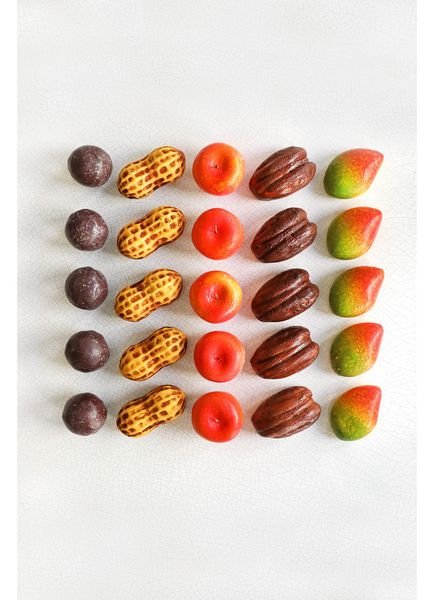
Cédric Grolet is technically brilliant. His trompe-l’oeil fruit desserts are genuinely impressive, and at Le Meurice, where he built his name, the product lived up to the presentation. He has since become the most followed pastry chef on social media in the world, with over 13 million Instagram followers.
The Paris pastry scene moves quickly. Chefs change, quality shifts. What you read here is true as of early 2026. When in doubt, ask a Parisian.